
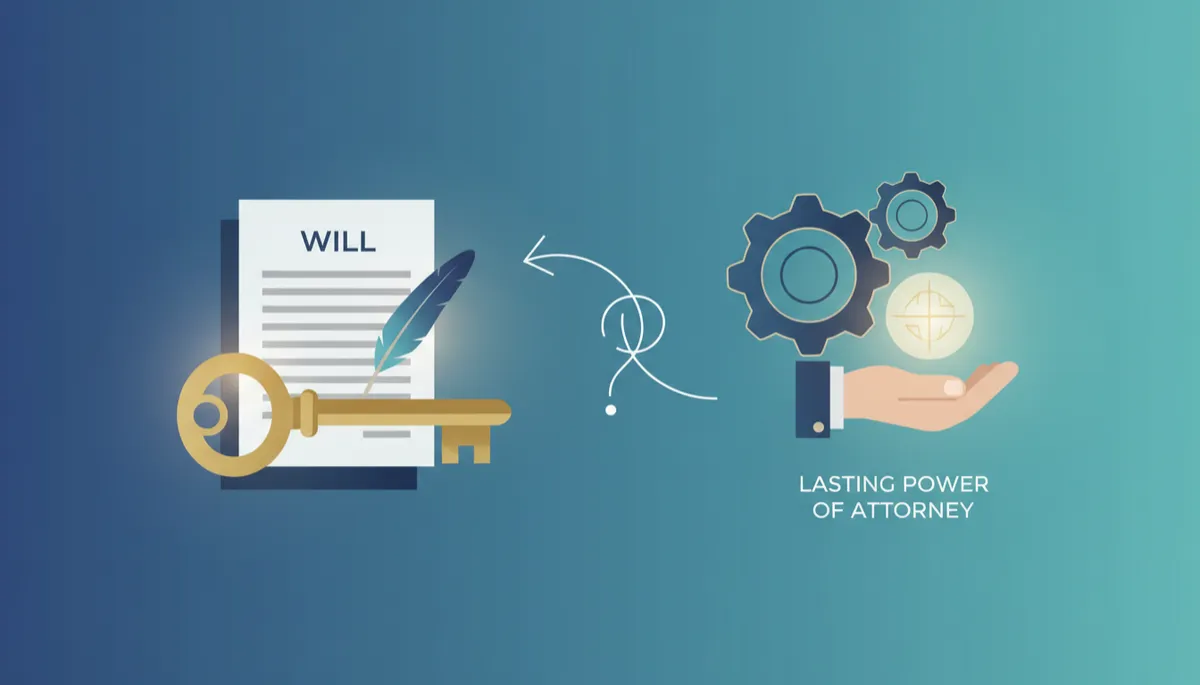
Will vs. LPA: Which to Arrange First?
Estate Planning, Wills, Lasting Power of Attorney
Will or Lasting Power of Attorney: Which Should You Arrange First?
Estate planning isn’t just for the wealthy or the elderly. It’s about protecting yourself and the people you care about. Two of the most important documents are your Will and your Lasting Power of Attorney (LPA) – but which should you put in place first?
Understanding the Different Roles of a Will and an LPA
A Will sets out what happens to your money, property and possessions after you die. It also allows you to name executors to manage your estate and, if relevant, appoint guardians for children. In short, a Will speaks for you when you are no longer here.
A Lasting Power of Attorney, by contrast, only applies while you are alive. It lets you appoint trusted people (your “attorneys”) to make decisions if you lose the ability to do so yourself – for example after a stroke, an accident, or because of dementia. There are usually two types:
Property and financial affairs LPA – covers your money, bills, savings, investments and property.
Health and welfare LPA – covers medical treatment, daily care and, in some cases, decisions about life-sustaining treatment.
Which Should You Arrange First – Will or LPA?
Ideally, you would put both a Will and LPAs in place as part of a joined-up estate plan. However, if you are deciding which to prioritise, many advisers suggest starting with a Lasting Power of Attorney.
The reason is simple: if you become unable to manage your affairs without an LPA, your family may face frozen bank accounts, delays and the expense of applying to the court for authority to help you. That can be stressful at an already difficult time. A Will, on the other hand, only takes effect after your death – and while dying without a Will can cause complications, there is at least a legal “back-up” in the form of intestacy rules.
📌 Key Takeaway: If you can’t do both at once, many people choose to put an LPA in place first, then follow up with a properly drafted Will as soon as possible.
Why Timing Matters for a Lasting Power of Attorney
An LPA must be made while you still have the mental capacity to understand what you are signing. Once capacity is lost, it is too late: no one can create an LPA on your behalf. That is why leaving it “until later” can be risky – illness and accidents rarely arrive with warning.
Putting an LPA in place early does not mean handing over control immediately. You can set it up now, register it, and your attorneys will only step in if and when it becomes necessary. Until then, you remain in charge of your own decisions.

A registered Power of Attorney can spare families delays at moments of crisis.
Don’t Forget: You Still Need a Will
While an LPA often deserves first place on the to‑do list, a Will is still essential. Without one, the law decides who inherits from you, which may not reflect your wishes – particularly if you are unmarried, in a blended family, or want to leave gifts to friends or charities. A Will also makes life easier for those you leave behind, giving them clear instructions at a time of grief.
The Best Approach: Plan Both, Start Somewhere
In practice, the best approach is to treat your Will and LPAs as two halves of the same plan: your LPAs protect you and your affairs while you are alive, and your Will protects your wishes after you die. If budget or time means you must choose, prioritise the document that would cause the greatest difficulty if it were missing tomorrow – for many people, that is the Lasting Power of Attorney, followed quickly by a well-considered Will.
Whichever you arrange first, taking action is the most important step. Putting these documents in place offers peace of mind now, and practical protection for you and your loved ones in the future.